

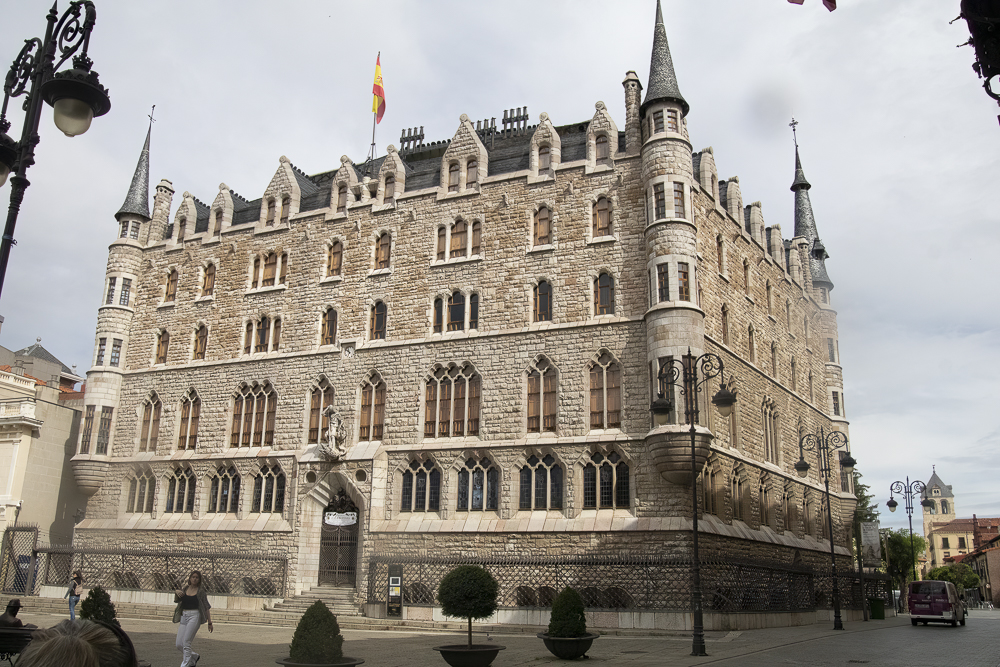
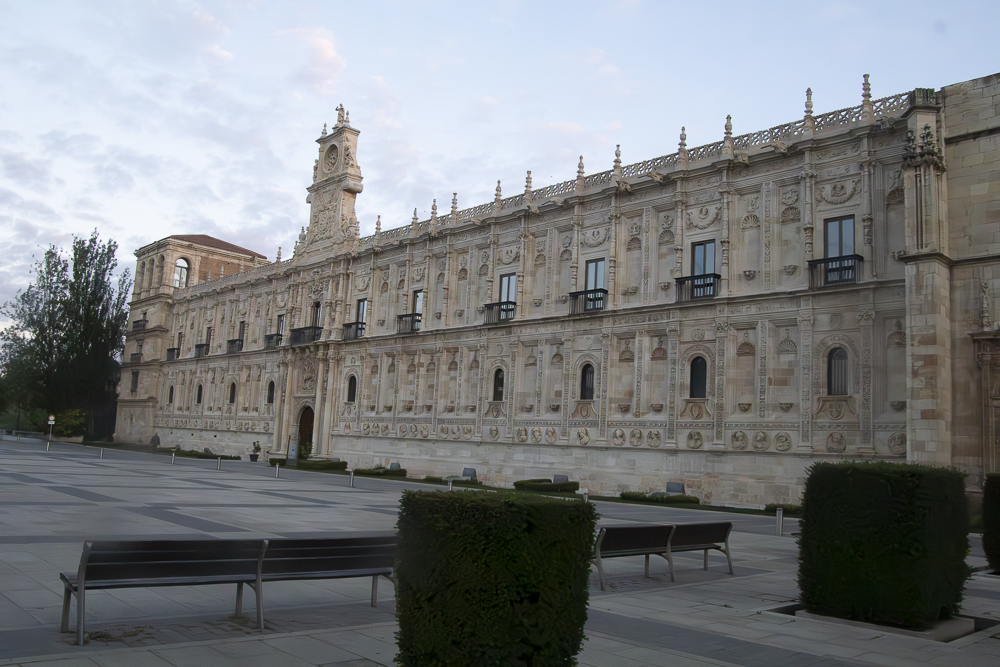
Up early, as today we walk again. The rest days in León were very rewarding, but now it’s time to continue the journey. We passed the Las Botines building designed by Gaudi, and onward past the Parador, used in the Martin Sheen movie ‘The Way’, before passing through university grounds and some parklands.
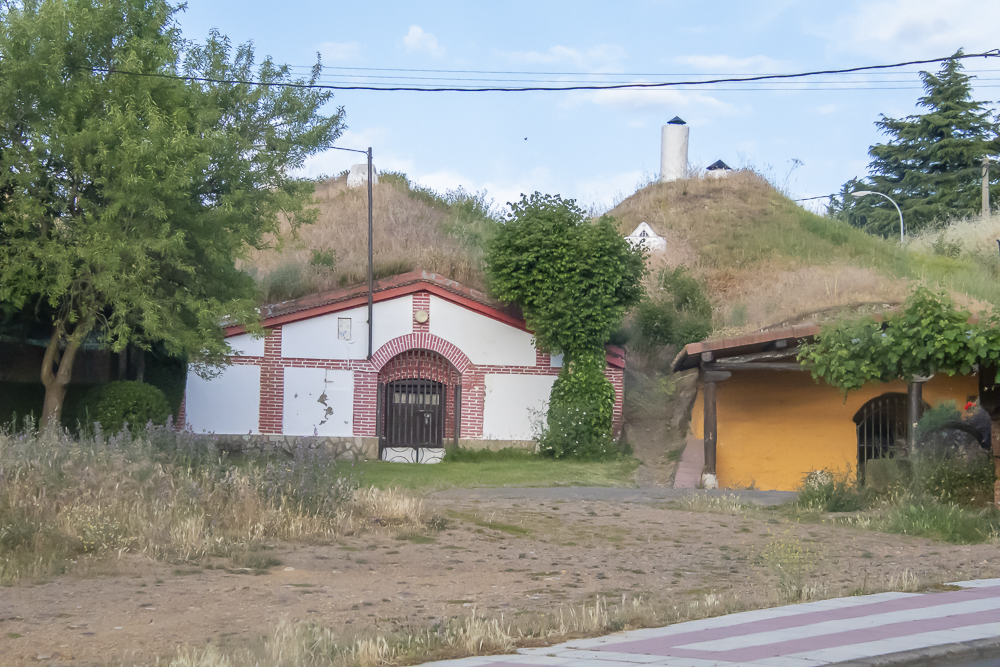
Within a short while, we were on the outskirts. We ran into an Australian woman who recognised me from the photos I’d been posting. She had been hoping to run into me and was very appreciative of my photos. We had a brief chat before moving on. We climbed the hill past some houses before turning right and onward past the ‘hobbit houses’ (bodegas or storage caves dug into the hillside).
Heading up through the suburbs and light industrial area, we stopped for breakfast at Virgen del Camino, for a decent bacon-and-eggs and tea.
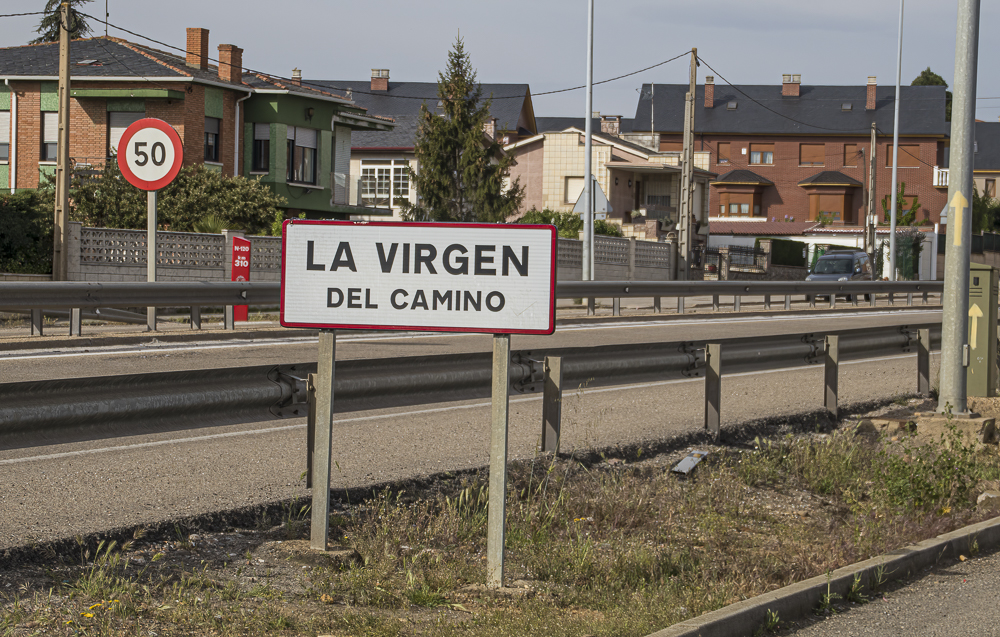
There is a modern church here, built on the site of a previous church, itself at the site of a miracle. According to legend, in 1505 the Virgin appeared to the shepherd Alvar Simón on this site and told him to have the bishop of Leon erect a hermitage there. The bishop was skeptical. To convince him, the shepherd used his sling to hurl a stone that magically turned into a boulder. This convinced the bishop, who ordered a church to be built there.
And further, according to Gitlitz and Davidson: In 1522, the Moors held Alonso de Rivera captive in Africa. He prayed to the Virgin to allow him to visit his home for the pilgrimage to the church of the Virgen del Camino. Rivera’s captors locked him in a chest on the eve of the visitation anniversary. But the Virgin transported the chest to Virgen del Camino, along with some captured church bells that pealed loudly when the chest arrived. To this day, the church displays Rivera’s chains, perhaps as a reminder to visitors that there is always hope, even when the situation seems beyond recovery. The current church was commissioned in 1961.
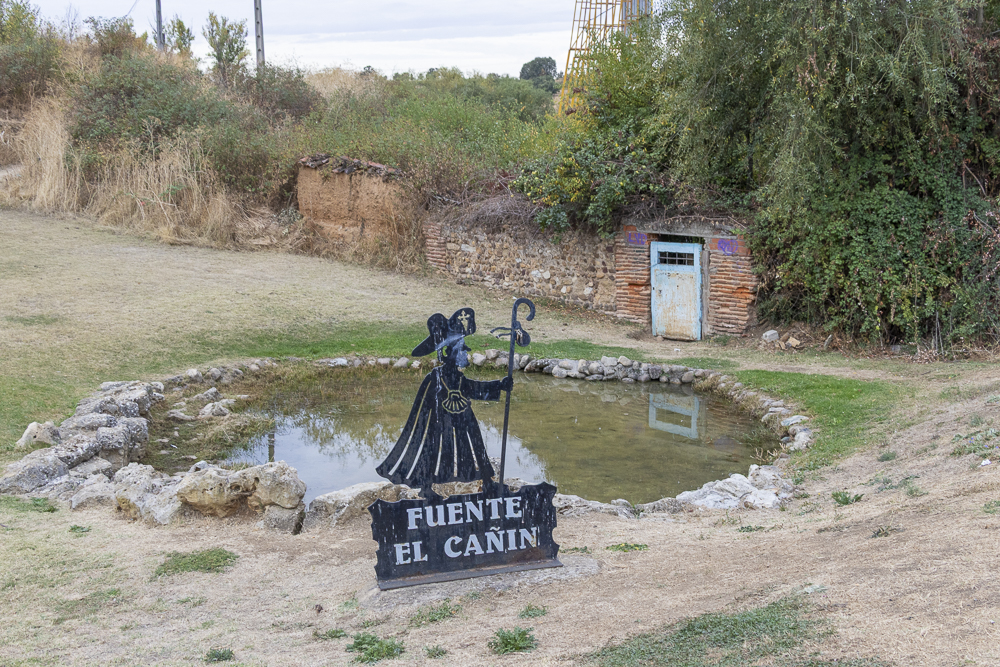
We took the variant path, heading for Villar de Mazarife. The path diverges near the metal pilgrim sculpture at Fuente El Cañon. But only around 10 percent of pilgrims seem to take this way.
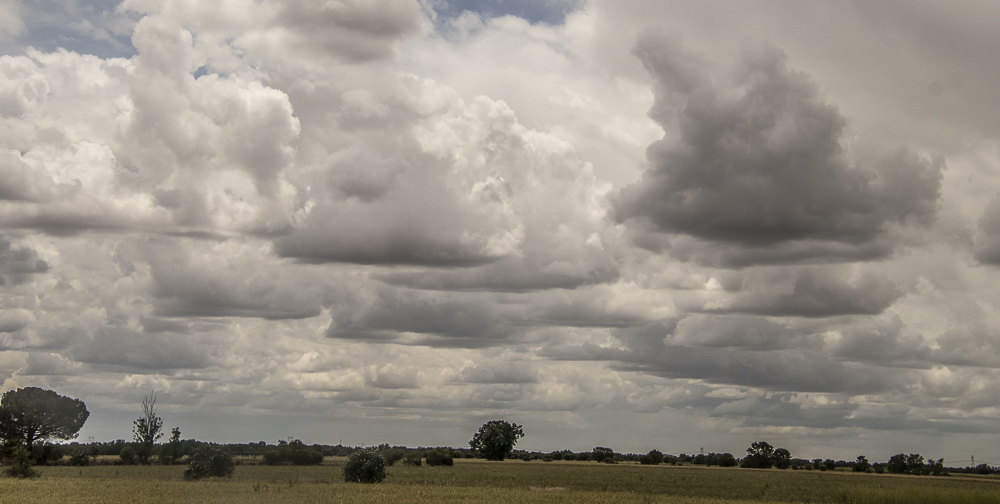
The track is generally good. The land is pretty flat and featureless agriculture, showing that the Meseta is not over yet. And neither were the dark clouds.
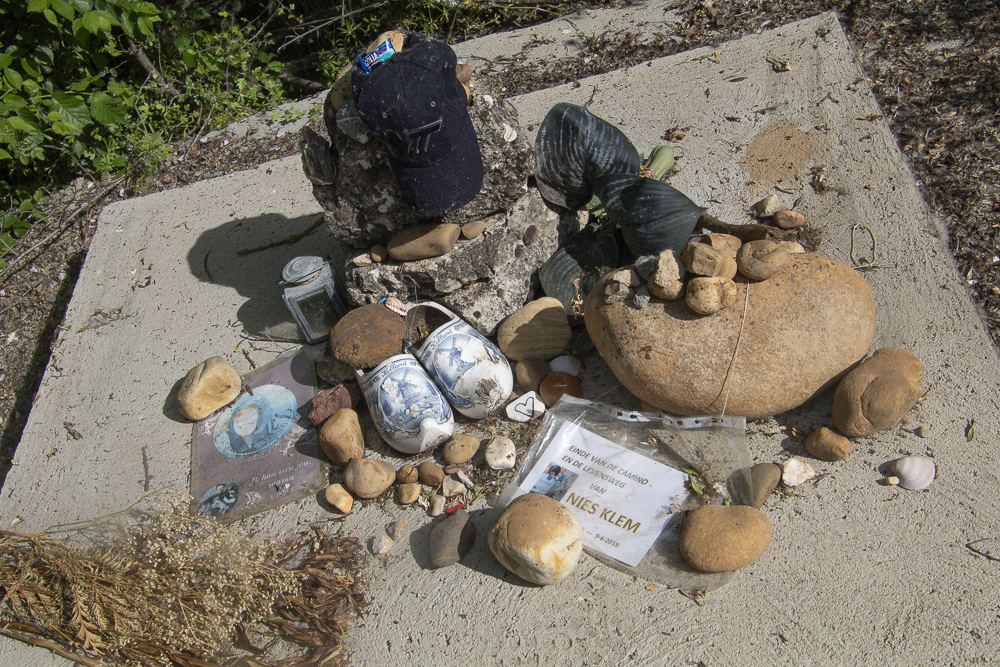
We took the bridge over the freeway and passed a memorial to a fallen pilgrim. Another daily reminder to be thankful for our health and the opportunity to walk this path. A kite circled overhead, watching for any small animals we might have disturbed in our passing.
We passed through a small village, although the bar wasn’t open. In previous years, they sometimes left the door half open so that pilgrims could use the bathroom. But not this time.
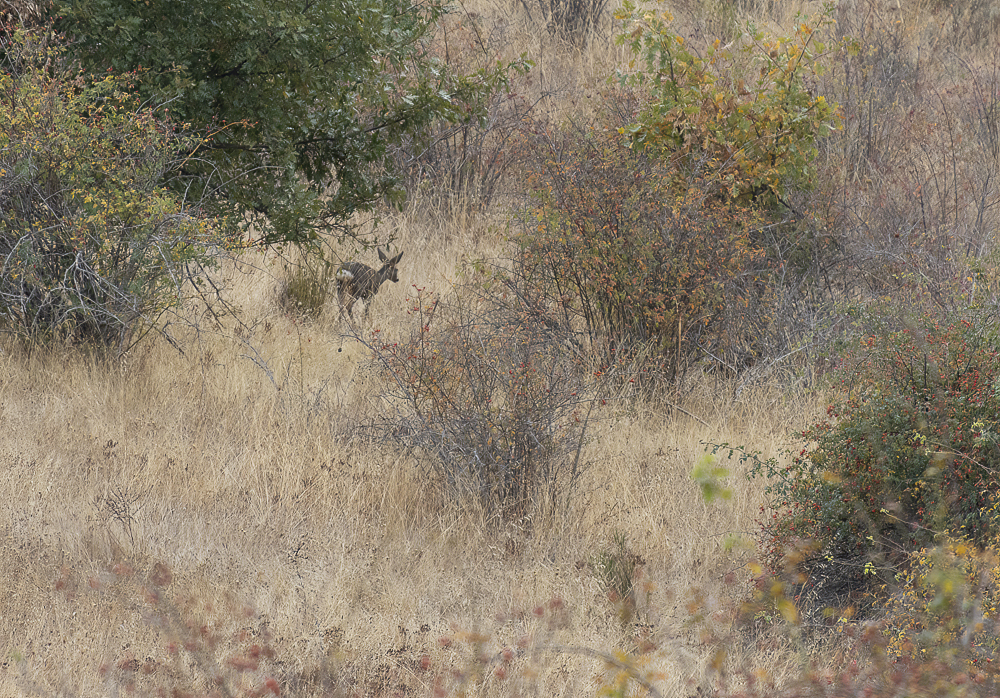
Not far from here, we saw a deer! We saw deer signs on previous Caminos. But this is the first time we spotted actual deer.
At Chozas de Abajo we found a place to eat brunch or second breakfast with an excellent tortilla patata and homemade cake — it was really good! It was a strange place though, resembling a large motel or inexpensive conference centre, but strangely empty, and located in a hamlet well out of the León precinct. We speculated that perhaps bus tours stopped here for the night.
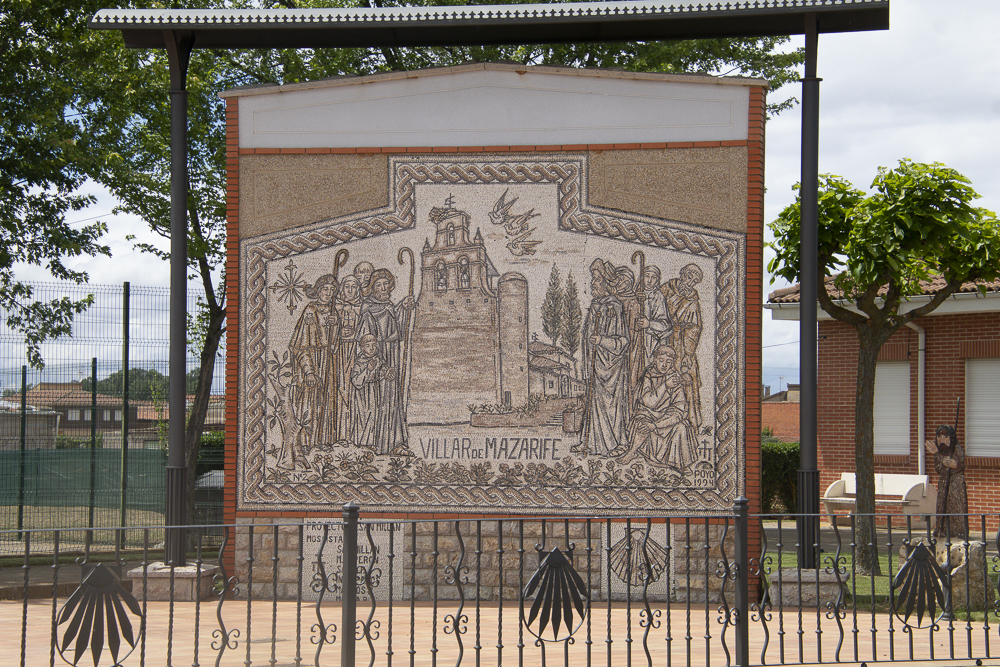
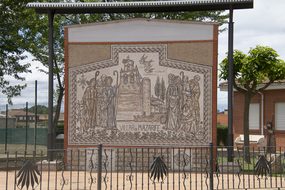
At length, we reached Villar de Mazarife with its famous mosaic town sign depicting historical pilgrims and three doves over the church, and we stayed at the somewhat spartan first albergue dedicated to San Antonio de Padua. We previously stayed at Teo Pepe’s, but their renovations closed them.
Meanwhile, at Albergue San Anton, our room was clean if a bit ‘tired’. We showered and did our washing before heading down the road to Bar Jesus for a ‘rehydration’ drink or two. It’s also an albergue, and it looked in better condition than the place we were staying. With the sun getting lower in the sky, we headed back for our rather meagre vegetarian pilgrim meal — that left us hungry and without energy for the next day.
So why is Villar de Mazarife part of the Camino? The town is named for its C9th founder, Mazaref, the head of a Mozarabic family from Córdoba. He led the repopulation of this area under the protection of the kings of León. The site is built on the remains of a pre-Roman settlement in the ancient villata. It became a strategic point on the Roman road that connected Asturica Augustus (Astorga) with Tarraco (Tarragona). After the apparent discovery of the remains of St James at Santiago de Compostela, this road became part of the pilgrimage route that followed in the early medieval period. Around this time, Villar de Mazarife adopted St James as its patron saint.
This may be a small town, but it has some remarkable stories