
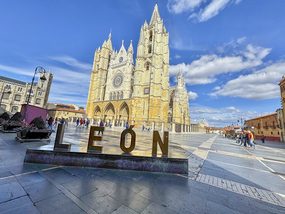

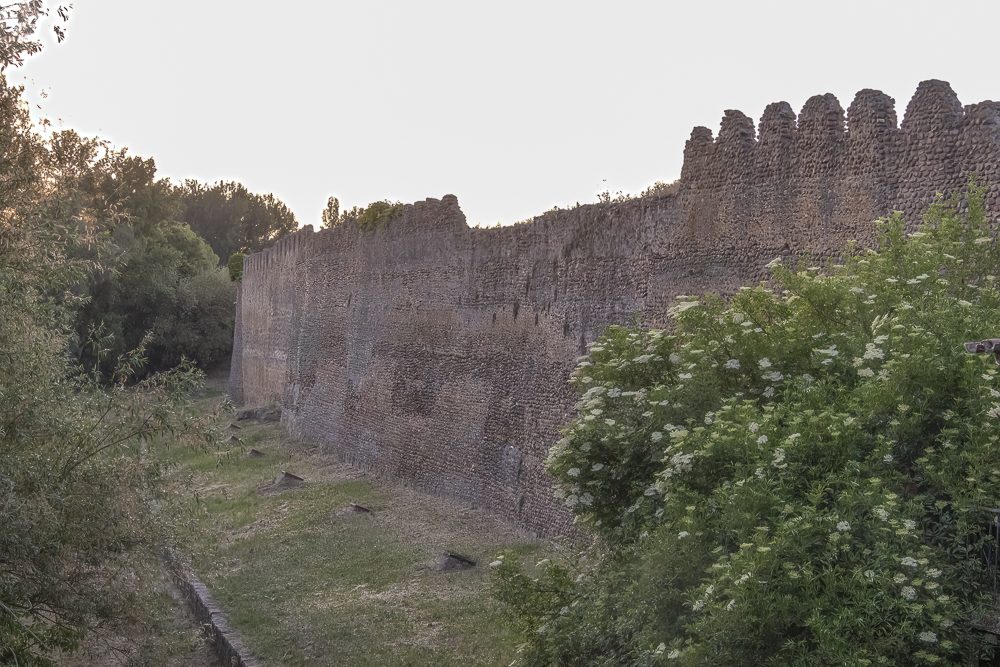
Facing 20km, we rose early to head from the Roman Mule market town and major intersection between the north-south and East-west Roman highways. We are heading to the Roman camp of Legio — now León. This is where the Roman 7th Legion kept a garrison during the Cantabrian wars. We headed out of the town, through the town walls and over the bridge — a medieval bridge built on Roman foundations. The wall itself was built by Charlemagne’s troops. We were directed over a pedestrian bridge as the medieval road bridge is a single-lane traffic with no pedestrian path.
Reaching Valdelafuente, we had a cup of tea and a napolitana (chocolate croissant) for breakfast.
Another cuppa at Arcahueja kept us going, and from here we are mostly beside the road.
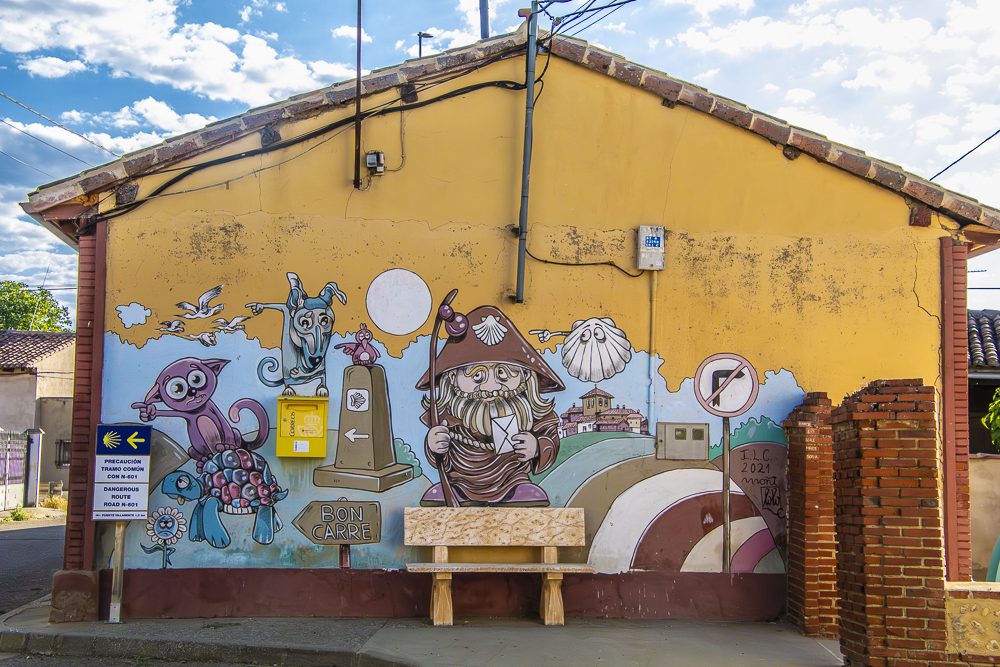
We declined to take the turn-off for the monastery of Sandoval. The detour would add an extra 5km – perhaps another time, as the photos of the monastery look amazing — similar to Samos!
León Approaches
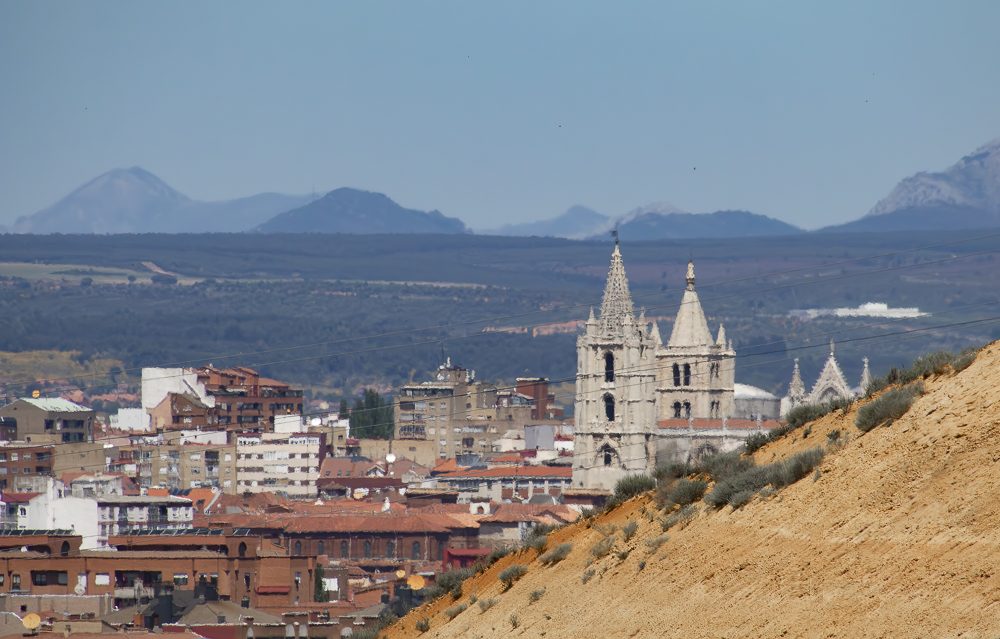
Our first glimpse of León came as we crested a hill, and we could see the cathedral off to the right in the distance. Before long, we were in the semi-industrial outskirts of León, past factories and car wholesalers, before entering the city itself.
We passed the city wall built by the Romans, which was raised further in the Middle Ages. And we headed into the old part of town to find our hotel — ideal for a rest day here. We found our accommodation just after reception had closed, so we shouldered our packs and went in search of lunch. The first place was unfriendly — ‘completo’ albeit with vacant tables. Perhaps they didn’t want to deal with pilgrims — the place was, after all, just opening up after COVID. We walked back up along the main street and found a place that served us a welcome salad.
Arrival
Somewhat refreshed, we headed back to the hotel — exhausted from lack of sleep and the 20km walk in 30°C heat. At last, they were open and so to a quick shower and finally our own siesta.
Around 7.00 pm, we looked for dinner. Eventually, we found a local brewery/restaurant and had a chicken curry — tasty but not at all spicy. We have found this a number of times in Europe – where curries seem to more closely resemble stews with added coconut milk.
By contrast, our 2025 Camino was quite different at this point. We were heading out of El Burgo Ranero heading for Mansilla de las Mulas when we received several frantic messages from our would-be host. It seems our bedroom is ‘broken’. Our host told us part of the accommodation suffered a fire, and the building was badly damaged and uninhabitable. Our host was very apologetic and provided a few alternatives we could try. At that point, we decided instead to have a couple of extra rest days in León. So we took the bus, arriving in central León almost 2 days early. Our apartment (actually just a room without kitchen facilities) could not extend our stay forward. So we instead booked into a boutique hotel just off the main square.
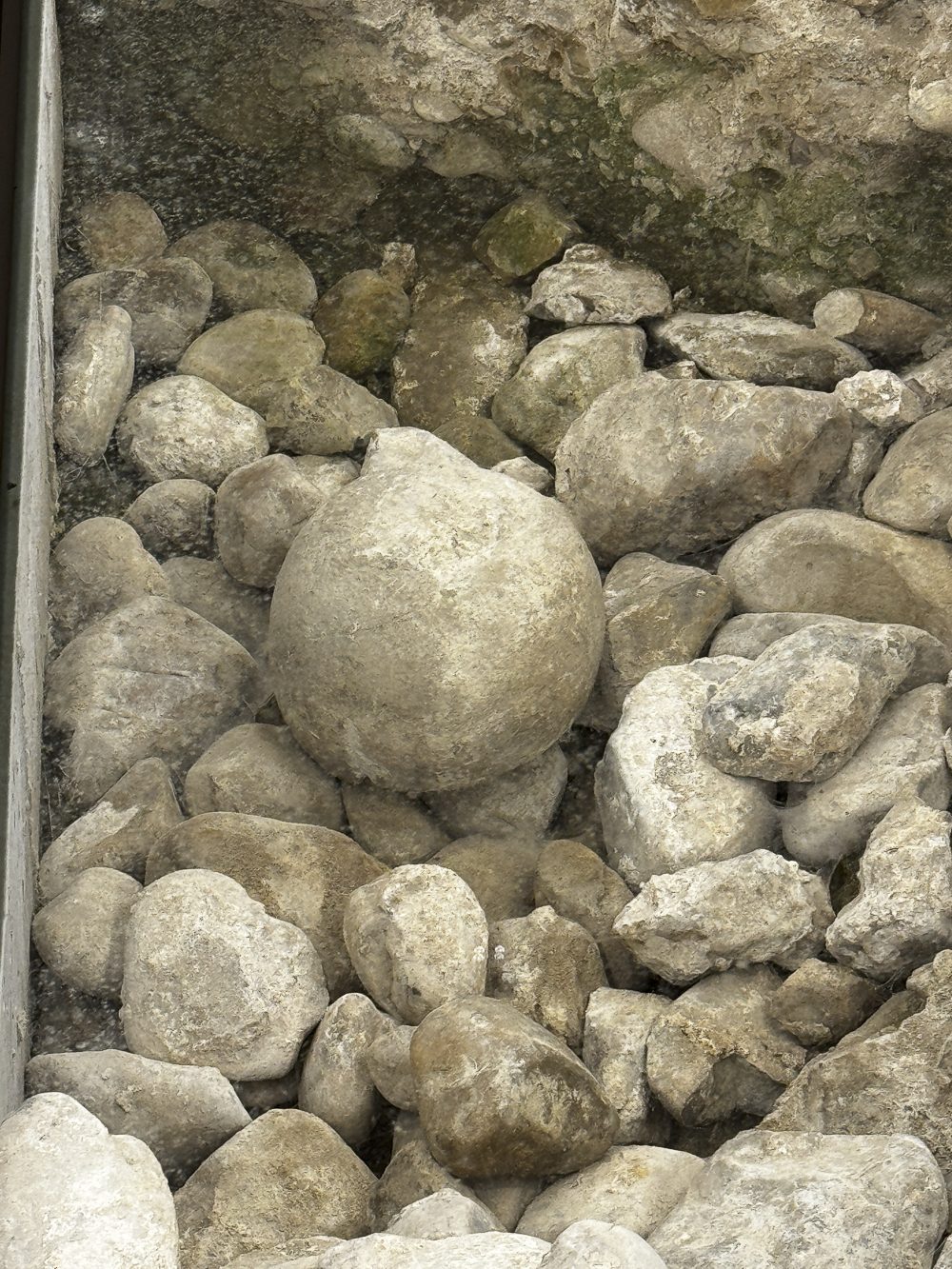
The wrecking (trebuchet) ball
And what an amazing place — it had a glass floor along the corridor, showing the original town walls and a stone trebuchet ball left where it had broken through the wall. Some might find it a bit disconcerting, but the glass was probably thick enough to drive a car over it. And the place has a lift (elevator), a welcome relief for tired legs.
So León is a fair-sized city, and noting that we now had four rest days instead of just two, we were able to explore a bit more than on our previous three Caminos.
Having arrived fairly early in the day, we walked out to a huge Decathlon warehouse store. I needed to replace a couple of base layers and socks that I had worn out. Later, we found an art supplies store to replenish our tiny sketching kit.
So you have a ‘rest’ day?
I think there are five remarkable places in León, plus a bonus one.
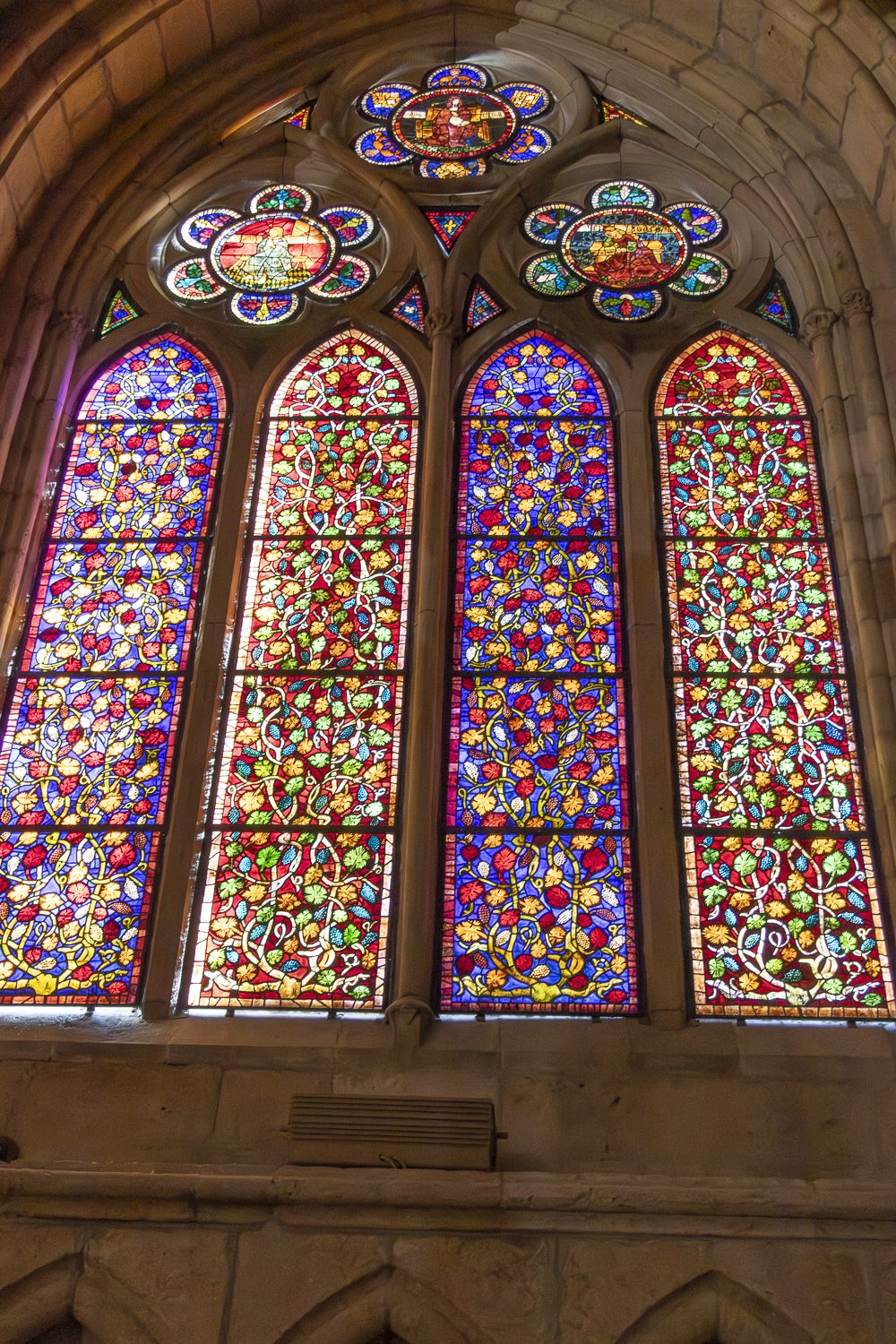
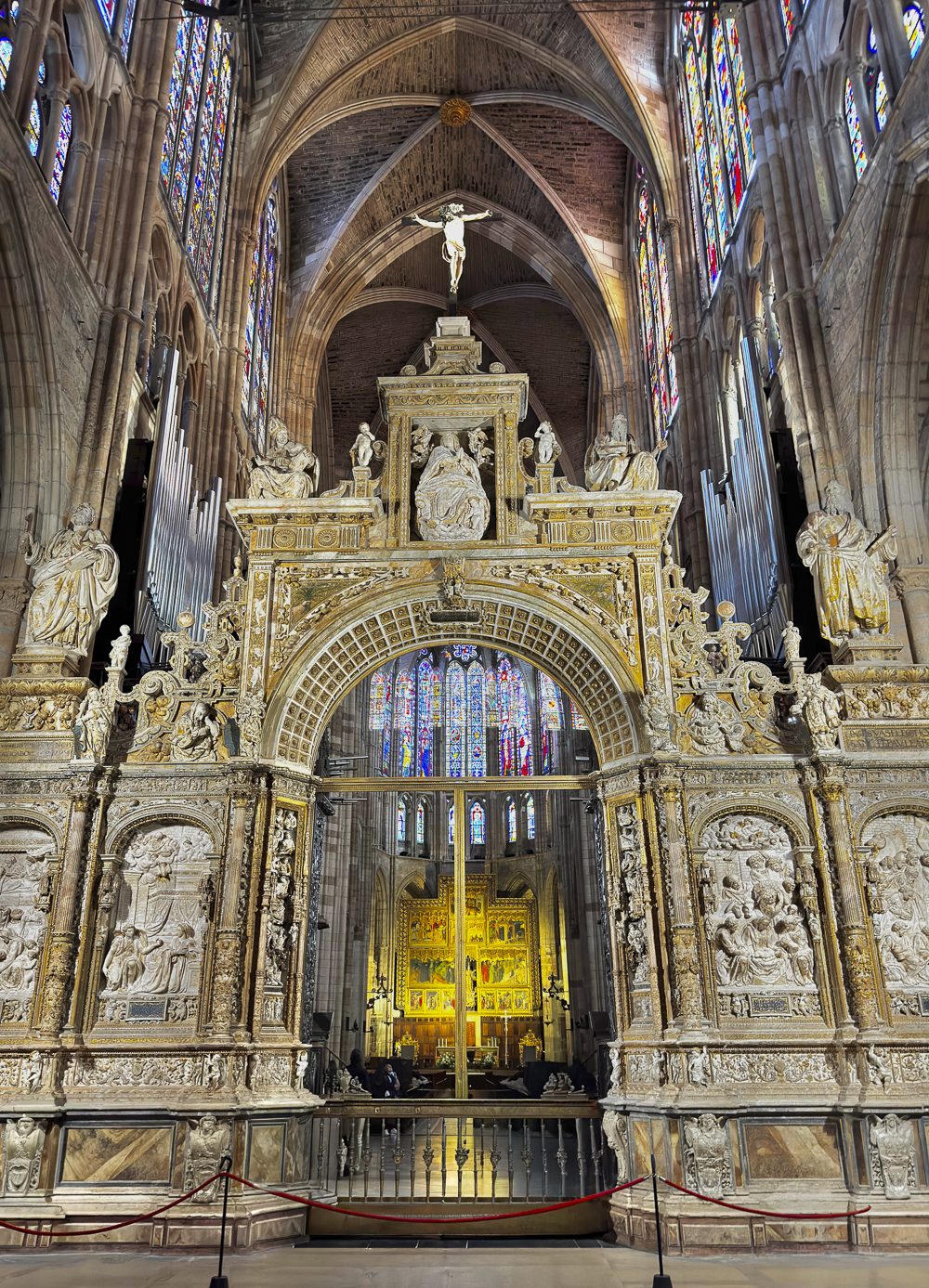
Firstly, of course, the Cathedral — its stained glass would rival that of Chartres in France. Indeed, the same artisans may have glazed this Cathedral. This is unlike many cathedrals that took upwards of 200 years, showing changes in building styles across different stages of construction. León Cathedral is a masterpiece.
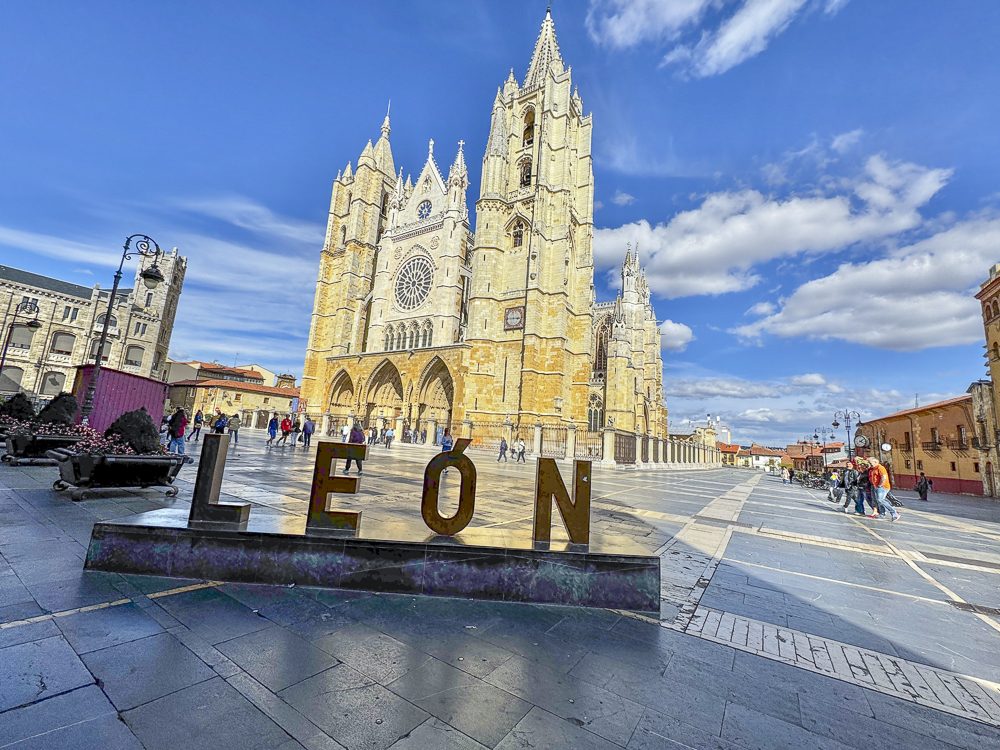
Building commenced in 1205 with a footprint encompassing the site of the old Romanesque cathedral, the remains of the palace of King Ordoño II and the Roman Baths installed by the 7th Legion of the Roman Army. The architect, Master Enrique, based his design on the floor plan of Rheims Cathedral. Problems with the foundations caused work to be halted, and finally work commenced properly in 1255. The building was completed in 1289 and consecrated in 1302 by Bishop Gonzalo Osorio. Enrique, had previously worked on Burgos Cathedral. The building has 125 windows covering 1800 square metres of surface — larger than the area of Chartres’ stained glass.
A Gaudi Masterpiece
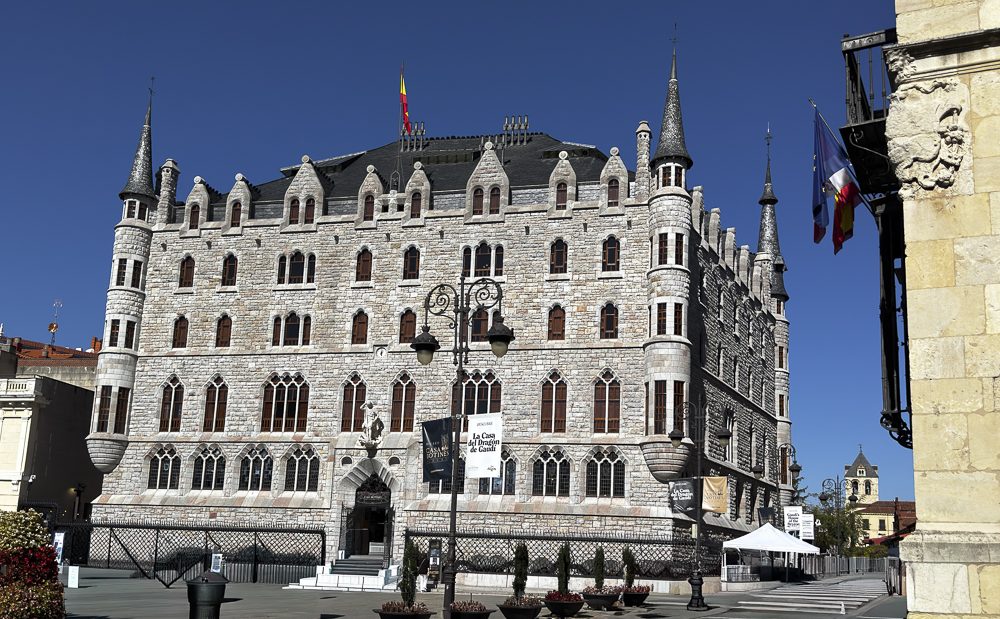
The second is the Casa de las Botines (built 1891-2). It looks at first glance to be inspired by Disney, or perhaps Hogwarts. But in reality it is one of the three buildings outside of Catalonia designed by renowned Art Nouveau architect Antoni Gaudí. Built for a fabric merchant family, the building is now a museum dedicated to Gaudi and the building itself. The company’s owner was Joan Homs Botinas — hence the name Casa Botines.
The Monasterio of San Isidoro
The third is the Monasterio de San Isidoro, also known as the Real Colegiata Basilica de San Isidoro. It was built on the site of a Roman temple. It was built in the early C10th as a monastery dedicated to St John the Baptist. So why is it now dedicated to San Isidoro? He was the archbishop of Seville and a noted academic and theologian of Visigothic Spain before the Arab invasions.
With the agreement of the Moslem ruler of Seville, his remains were transferred to León to be interred on Christian ground. Following the Reconquista, Alfonso V of León rebuilt the church as a basilica. And later, King Ferdinand I and Queen Sancha dedicated it to the now-canonised San Isidoro. Also, the queen chose the site to be the new Royal burial chapel. Eleven kings lie buried beneath the highly decorated vaults in the Royal Pantheon. People sometimes call the Royal Pantheon the Sistine Chapel of León due to its rich Romanesque art decorations.
A special chalice

The museum also houses the Chalice of Doña Urraca. The cup is one of the supposed contenders for the Holy Grail. Although set as a chalice in medieval times, the cup itself is a plain onyx cup from the 1st Century. Its lid now serves as the base of the chalice. The story goes that after the fall of Jerusalem to the Saracens, Arabs took the cup to Cairo.
When hard-pressed by the Reconquista in Spain, they offered the cup to Ferdinand I, the father of Doña Urraca, as a peace offering by an Andalusian ruler. And so it ended up in León. Although you are not allowed to take photos, you won’t regret visiting the museum. The image depicts a copy made for an exhibition. (The image here is used under Creative Commons and copyright belongs to José-Manuel Benito Álvarez.)
[photo credit: wikimedia — Image is linked to the original image]
Wait, there are Romans?
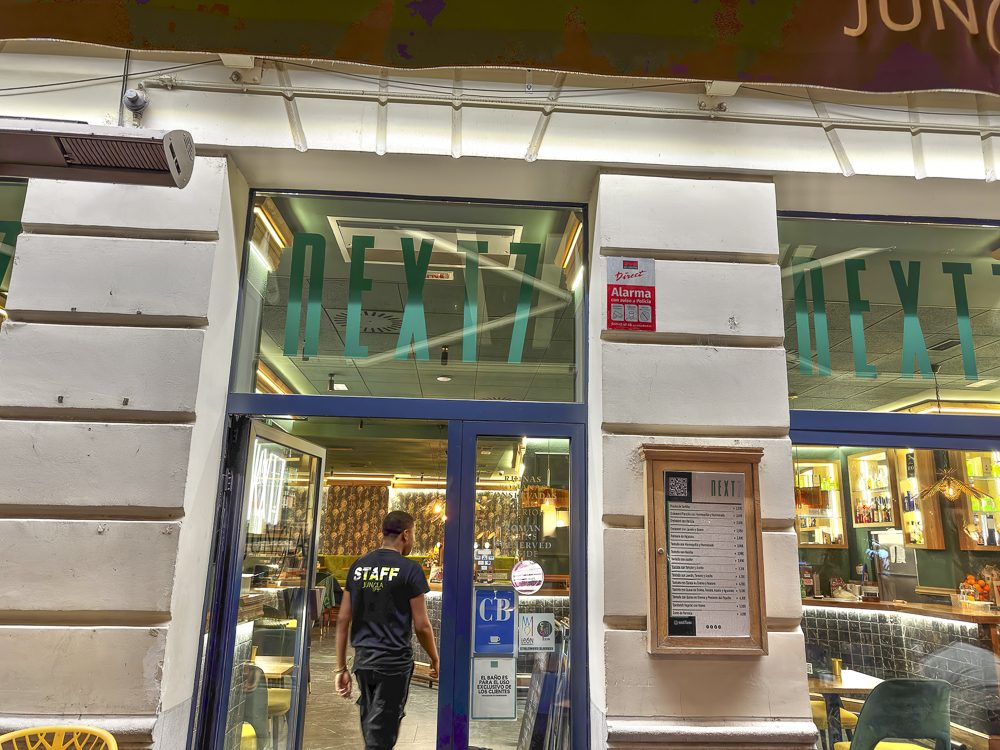
The fourth is a bar on the main street. It is called Next-7. Perhaps the ‘7’ should have been a clue. We stopped for lunch at this bar. And, while waiting for our order to arrive, I sat idly trying to make sense of some reversed text on the main door. The sign said words to the effect: ‘Inside are conserved Roman ruins’.
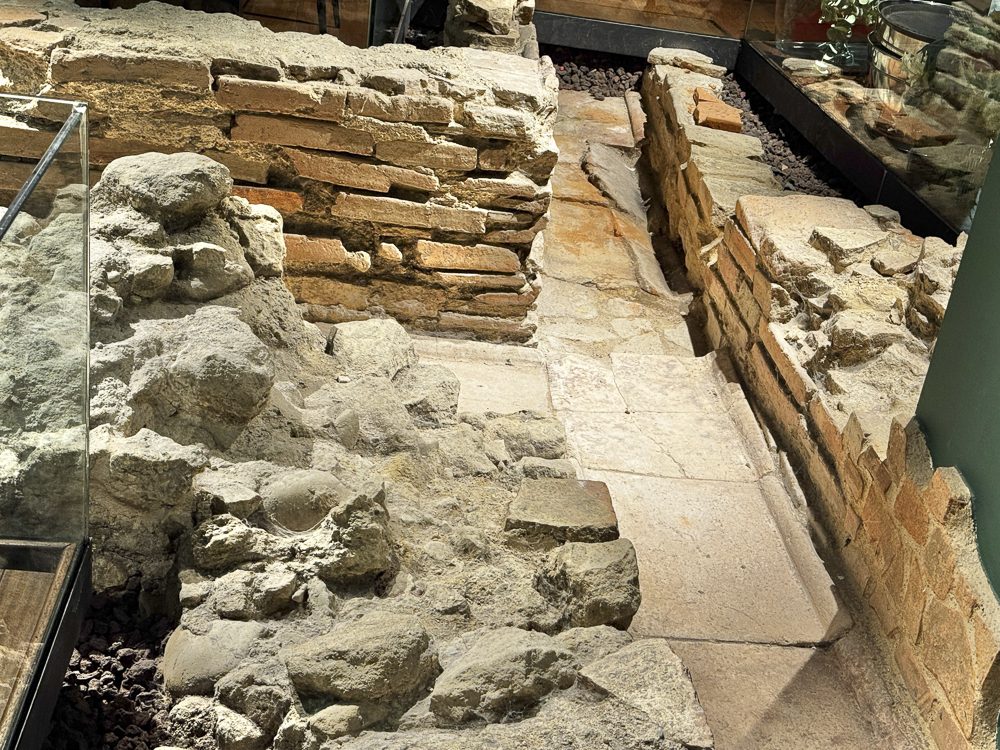
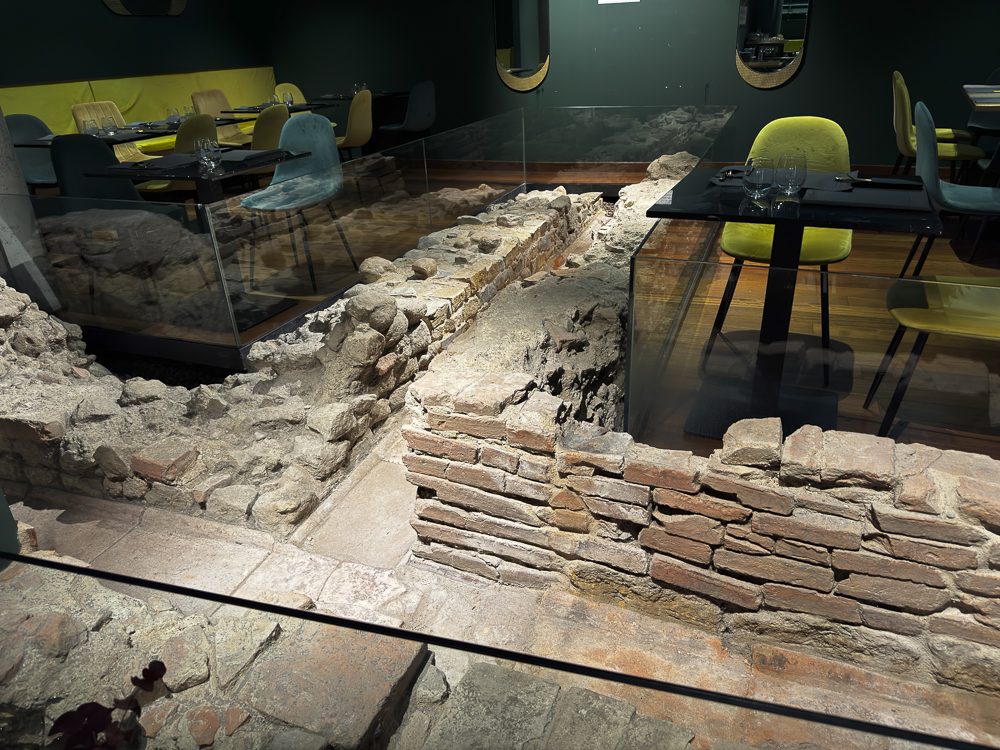
Really? I looked around the bar and saw a glass panel in the floor, looking down onto a preserved street seemingly in the cellar below. I saw some stairs nearby and gestured to the bar manager, who smiled and nodded. Going down to the basement, I saw there, among the beer kegs and cartons of soft drinks, a Roman street with some tables and chairs arranged so people could dine among the ruins. I took some photos and re-joined Sharon. It appears that the bar was built above a corner of the headquarters (principia) building of the Roman 7th Legion. I’m sure that any remaining ghosts would be happy to know that their army headquarters was now a bar.
Museo de León
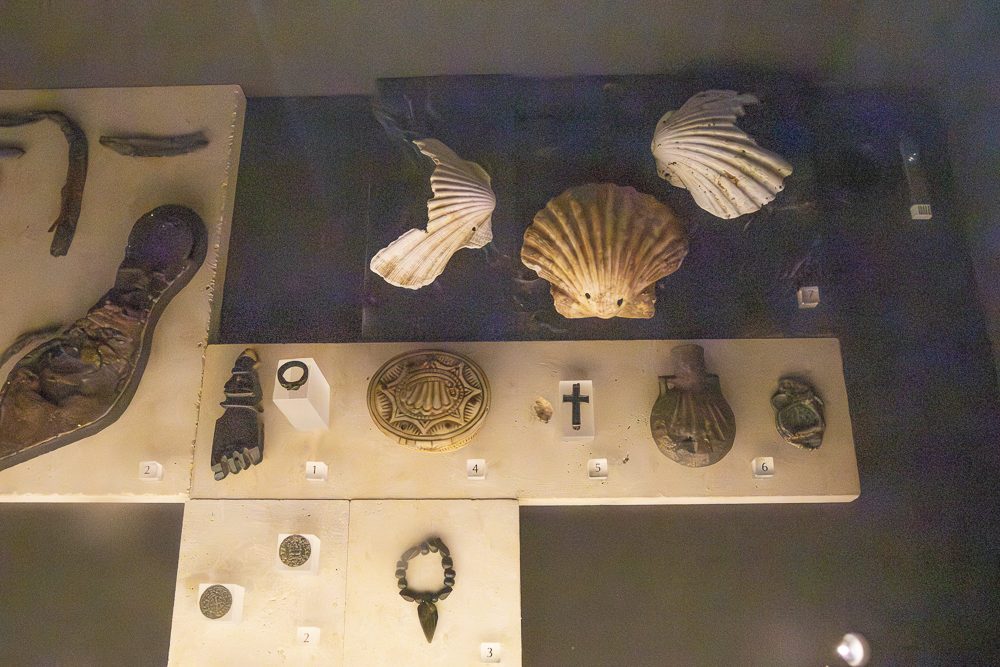
Finally, a special treat is the Museo de León, where there is a remarkable collection of paintings, inluding Miro and Picasso, but also Roman finds, such as dog footprints on a roof tile — evidently walked on while the clay was drying, Roman shoes, and pilgrim charms and badges dating back to medieval times, and much more — for a regional museum this is well worth a visit.
Museo de Semana Santa
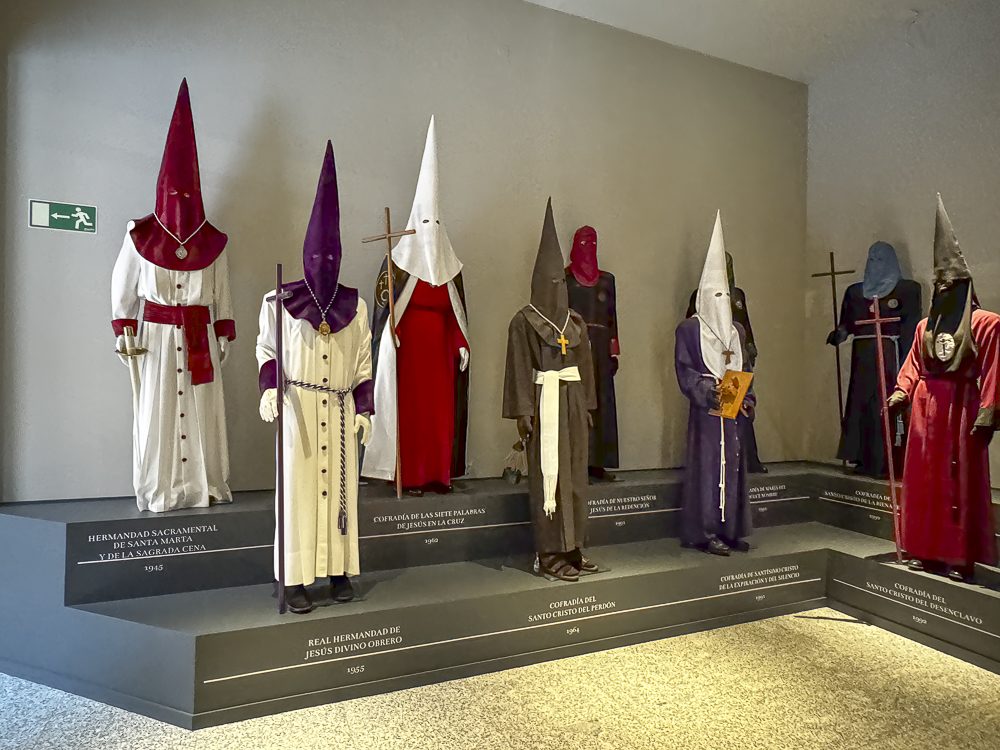
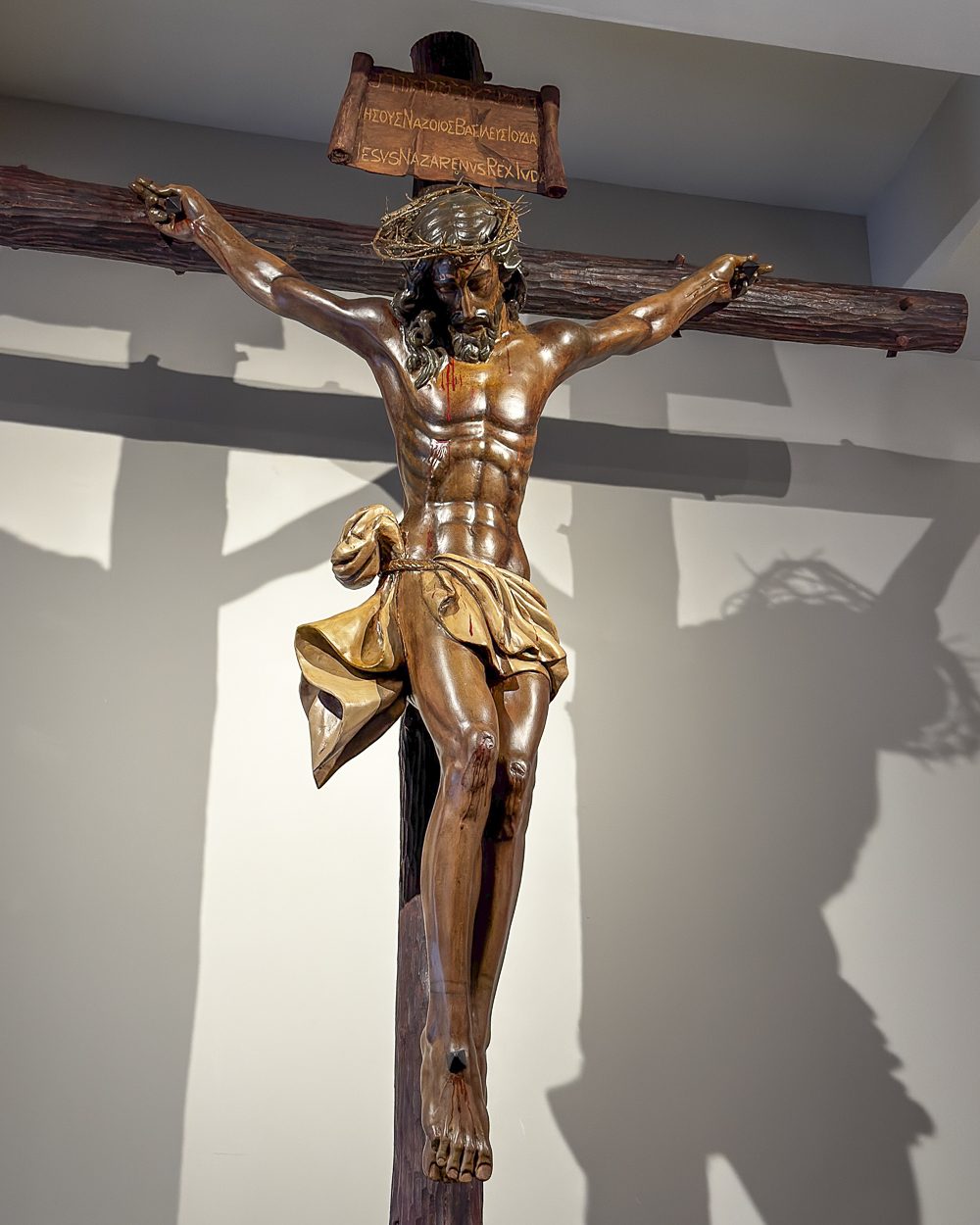
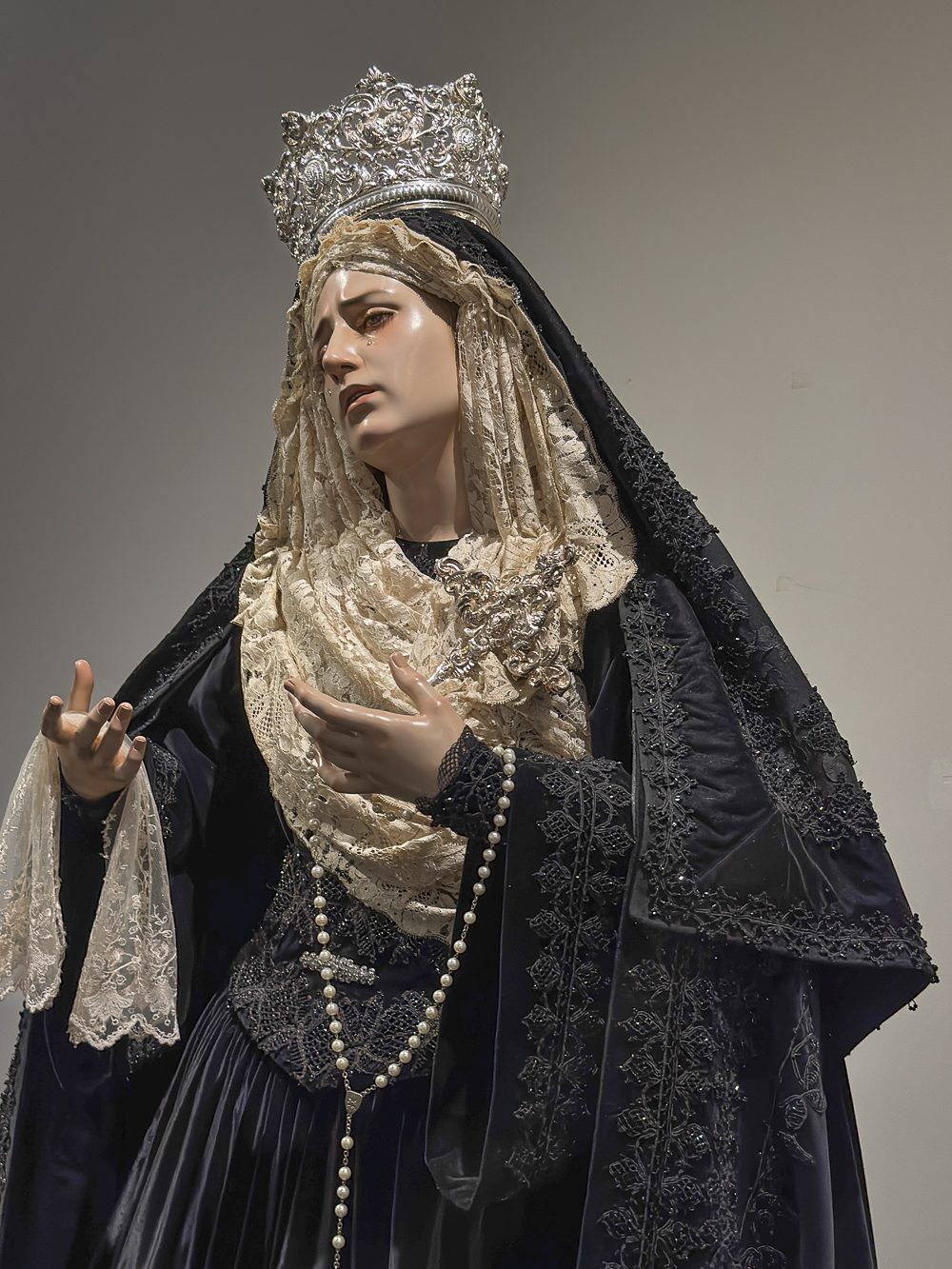
For the bonus one, there is also a museum dedicated to Holy Week (Museo de Semana Santa), where you will find the penitent robes of various Orders through the ages. I should point out that these are not Klan robes. The museum also has some amazing carvings of the Passion and crucifixion of Christ, and of the Madonna, designed to be paraded around the city on Feast Days.
We sketched the lion sculpture emerging from the sewer cover, the way lions were lifted during gladiatorial spectacles in Rome.
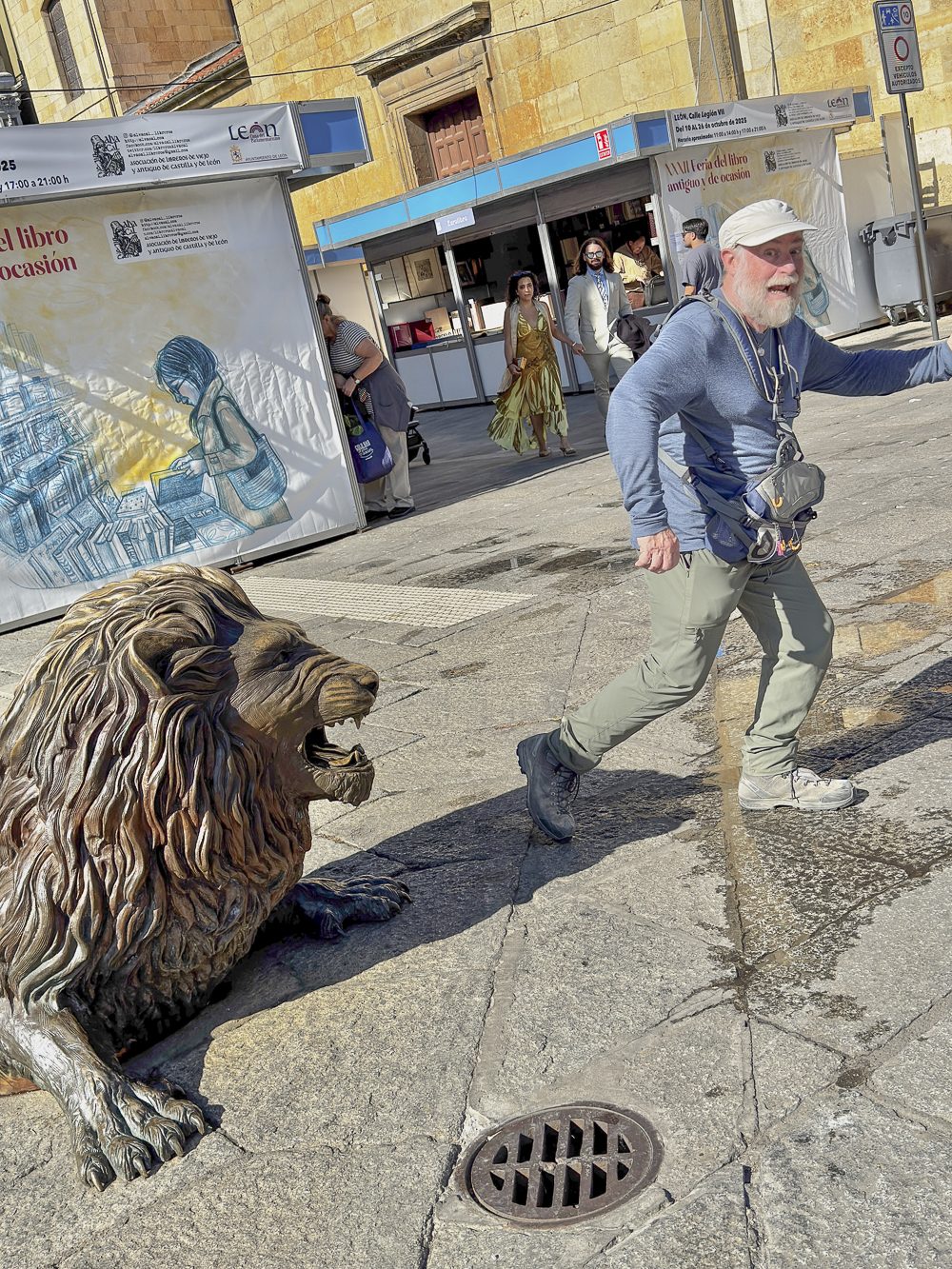
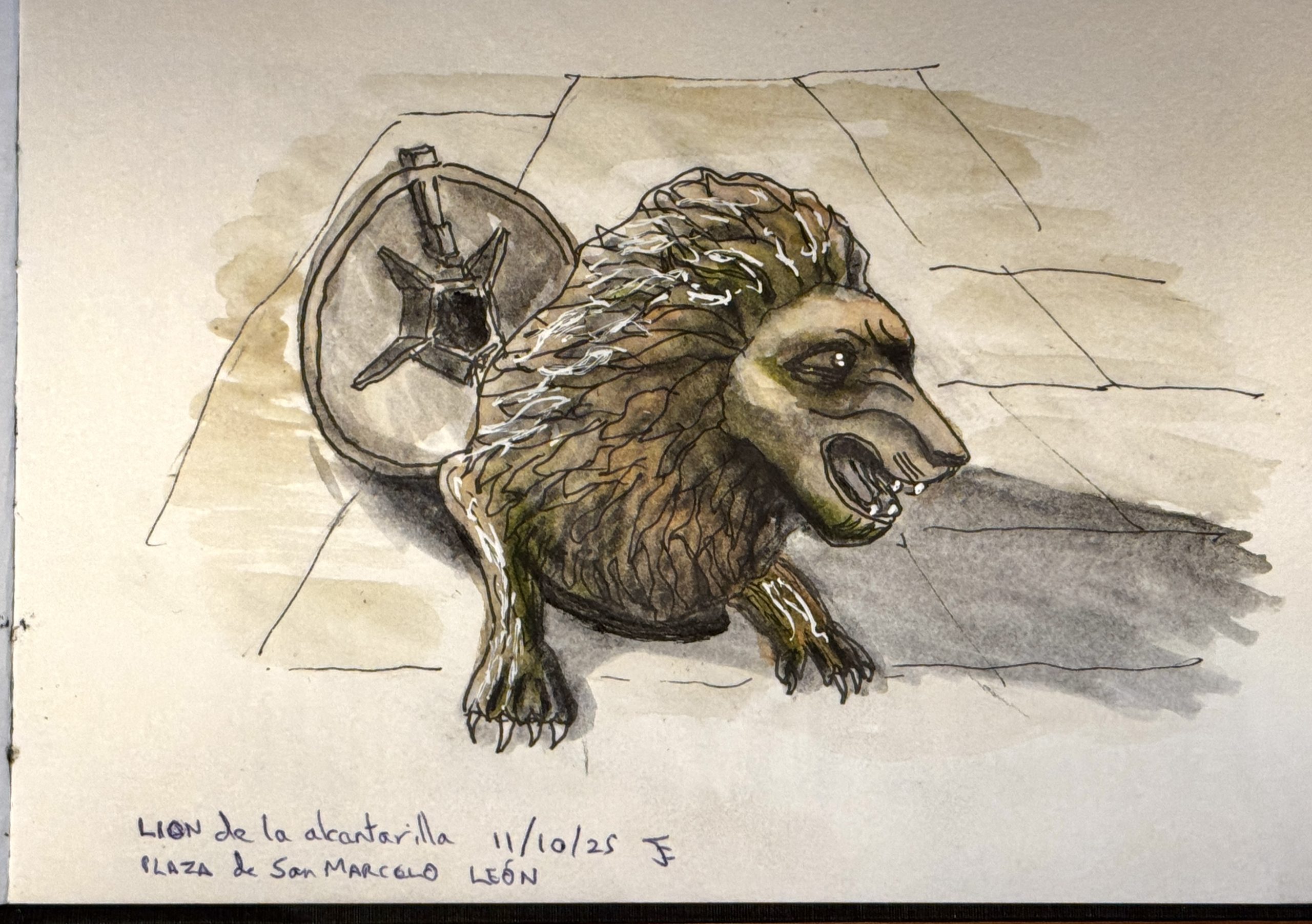
Incidentally, we found an excellent art supplies store just 1.2km from the centre of town, so we were able to top up some of our meagre sketching gear 🙂 Sketching is a great way to slow down and really observe your surroundings.
So León is worth a rest day or two, and this set us up well for the rest of our Camino walk.