
Have you ever thought about how ancient mythologies find resonance in today’s world? And how they keep resonating in different ages? People often talk about the Camino de Santiago as a metaphor for life. And it occurs to me that the power and survival of ancient myths is perhaps down to their power also as metaphors for life or life-lessons.
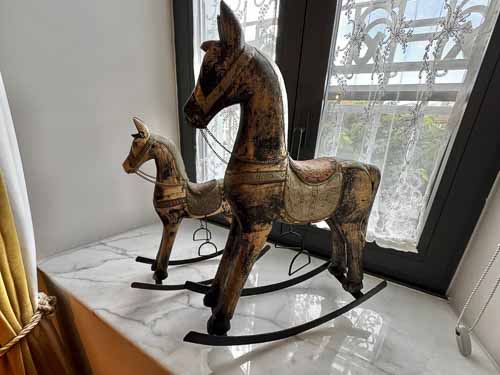
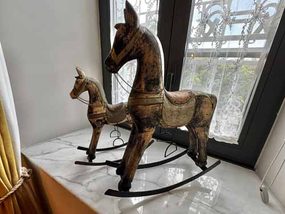
Consider Homer’s Odyssey, the story of Odysseus returning home from the Trojan War. I recently watched the movie, which was released a few weeks ago. So if you haven’t seen the movie, I suggest you click away now as there will be spoilers… Yes, the ship sank here too 😉
Pilgrimage in medieval times was sometimes about redemption and punishment for crimes— This is echoed in the Classical period with the tale of Odysseus who deceived the Trojans with the gift horse, contrary to the golden rule of kindness to strangers— the Rule of Zeus according to the movie. This is also a version of German philosopher Immanuel Kant’s ‘categorical imperative’, or the Christian notion of treating others as you would like to be treated.
Initially, his pilgrimage home seemed to be about gratitude for victory in the Trojan War, but there is an undercurrent that the constant setbacks in Odysseus’ journey were about punishment because he had offended the gods.
Moreover, he wanted to set off on a separate route from his compatriots, perhaps in order to process the brutality of ten years’ conflict — and to come to terms with his post-traumatic stress. He sought travel as a way to make sense of the past ten years and his ambiguous role as victorious leader, yet he achieved that victory, in his terms, unethically.
So, grateful for an end to conflict, grateful for victory, but guilty due to his betrayal of the law of hospitality, he sets out on his pilgrimage home.
We meet him in the movie after 7 years stranded on an island with Calypso treating his post-traumatic stress disorder (PTSD) with drugs of forgetting — dosing him with lotus flowers and nursing him physically and then psychologically back to some sort of health.
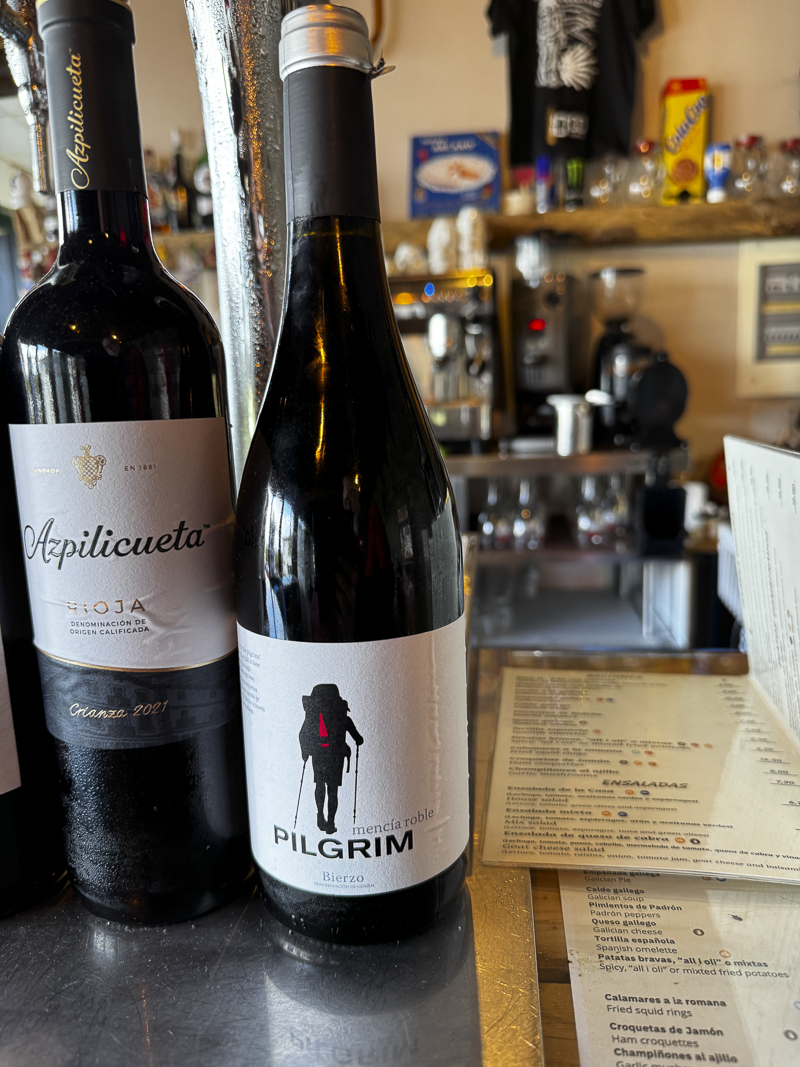
He has always known at some level that he needed to get home, but the lotus drug was powerful, and while making him forget the trauma of war and the loss of his ship and crew, it also made him forget that he had a sacred journey to complete.
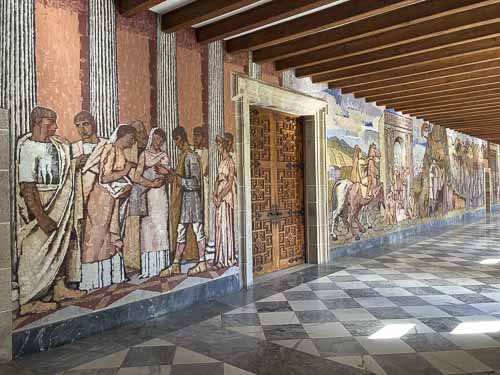
As he healed, he began to remember that he had a wife and son at home. Calypso, meanwhile, had fallen in love with Odysseus and wanted him to stay and enjoy immortal life with her, perhaps the equivalent of the nurse/psychologist falling for a longstanding patient.
In some ways, perhaps the sense of time-out-of-time on the Camino has resonance with this part of the story, as we live in the present moment on the Camino, and away from the cares of work deadlines and day-to-day cares. On the Camino, life is simple — walk, eat, sleep and repeat. There is a comforting rhythm in that, and it is tempting to want to continue the pilgrimage, even past Santiago de Compostela to go on to Finisterre and Muxia.
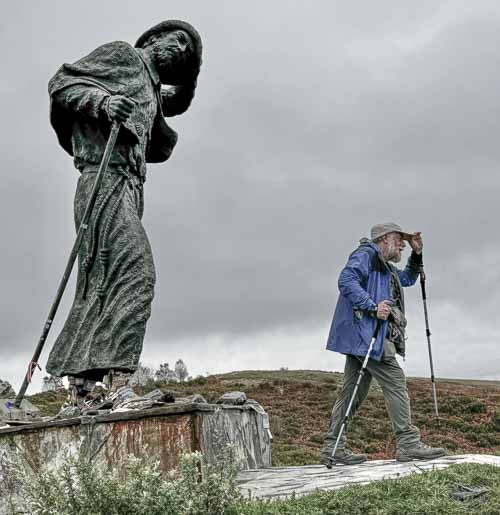
Many on the Camino are cast adrift in their lives in some way, perhaps at a turning point, between careers or relationships, and the siren call to step outside of one’s daily life is strong. This also explains why returning home is often a wrench, as we realise we are returning to a life that has changed in our absence, as we too have changed.
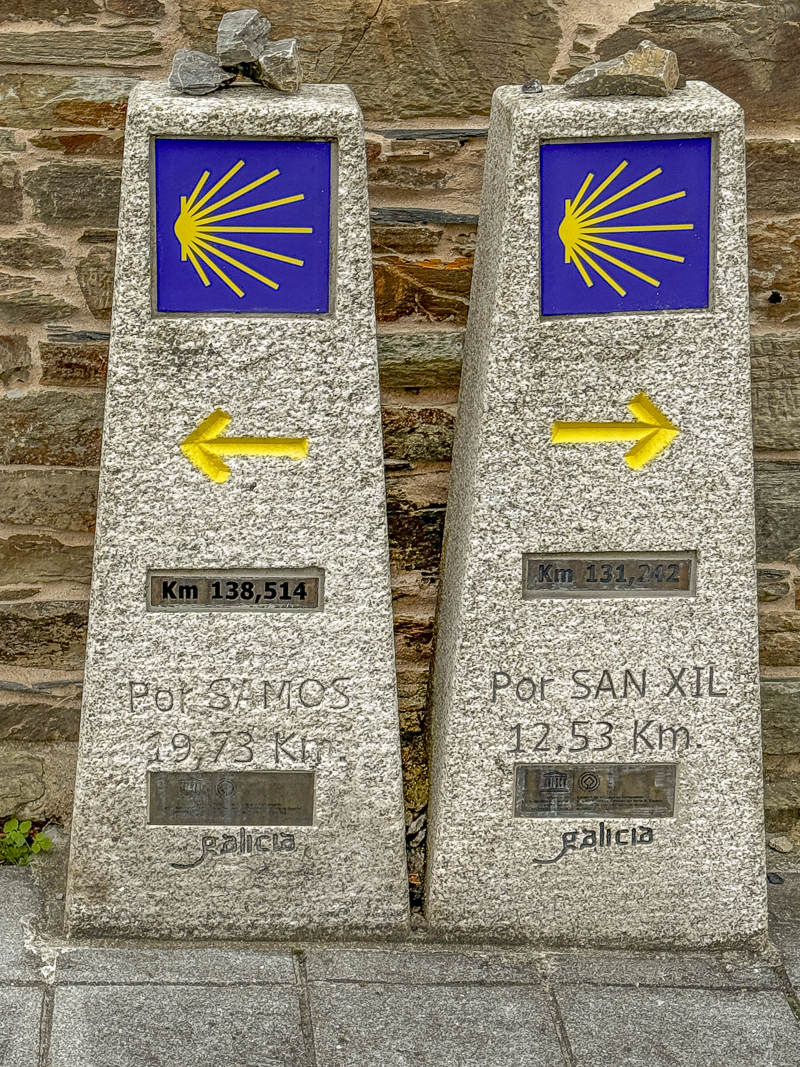
Odysseus’ journey takes him to dark places, even to the Underworld itself. So too, we are often left alone with our thoughts, especially on the Meseta, and for some pilgrims, that time spent in thought can bring to the surface long-suppressed memories and deep emotions. And sometimes doubts creep in as to where this journey is taking us. Time and again, like Odysseus, we suffer our own shipwrecks and setbacks.
But, just as the goddess Athena helps out at crucial moments to help Odysseus overcome his hardships, so too, Camino angels appear, often at crucial moments to provide encouragement and to help keep us on the Camino path — sometimes literally!
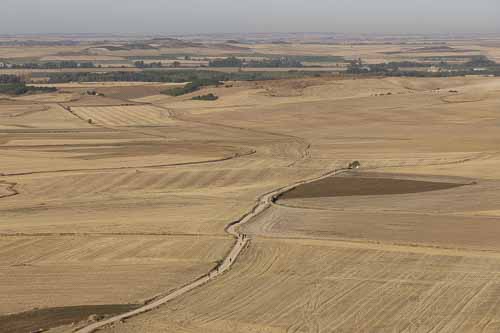
Sometimes on the Camino, we are torn over difficult choices, the whirlpool of Scylla and the rocks of Charybdis — leading us to the question of whether to take the difficult route, or the easier one that leaves us guilty about not facing up to the difficult path. And just as the witch Circe turns Odysseus’ crew into pigs, showing their real character, so too the Camino reveals to ourselves our real character — hopefully not as pigs — self-centred, arrogant, and judgemental — but rather as pilgrims with generosity of spirit and kindness towards strangers.
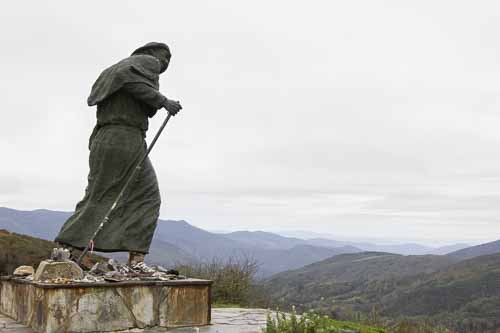
Sometimes adversity arrives as a consequence of seemingly unrelated events or life choices in the past. Such as, Odysseus blinding the one-eyed Cyclops Polyphemus, son of Poseidon, the god of the sea. Hence, Odysseus faces storm after storm and a difficult journey as a result of his previous actions that come back to bite him. Poseidon clearly didn’t realise just how delinquent his son had become, to the extent that his one-eyed opinions blinded him to the value of diversity of views.
It is telling that the only way for Odysseus to get home is to relinquish control and let his Camino provide. It well illustrates the dichotomy of control that the Greek philosopher Epictetus describes in his Enchiridion. According to Epictetus, life is split into two categories: things up to us (our thoughts, our interpretations, desires, and actions); and things not up to us (our bodies, our property, others’ opinions of us, and external outcomes).
In a sense, sometimes we need to recognise that we cannot control everything in our lives, and that we need to work with the situation at hand, without anxiety for a future that hasn’t happened yet, or regret for a past that we cannot change. Only once he has accepted that, can Odysseus reintegrate properly into his life and truly come home. So here symbolically we leave behind those burdens that hold us back from who we are becoming.
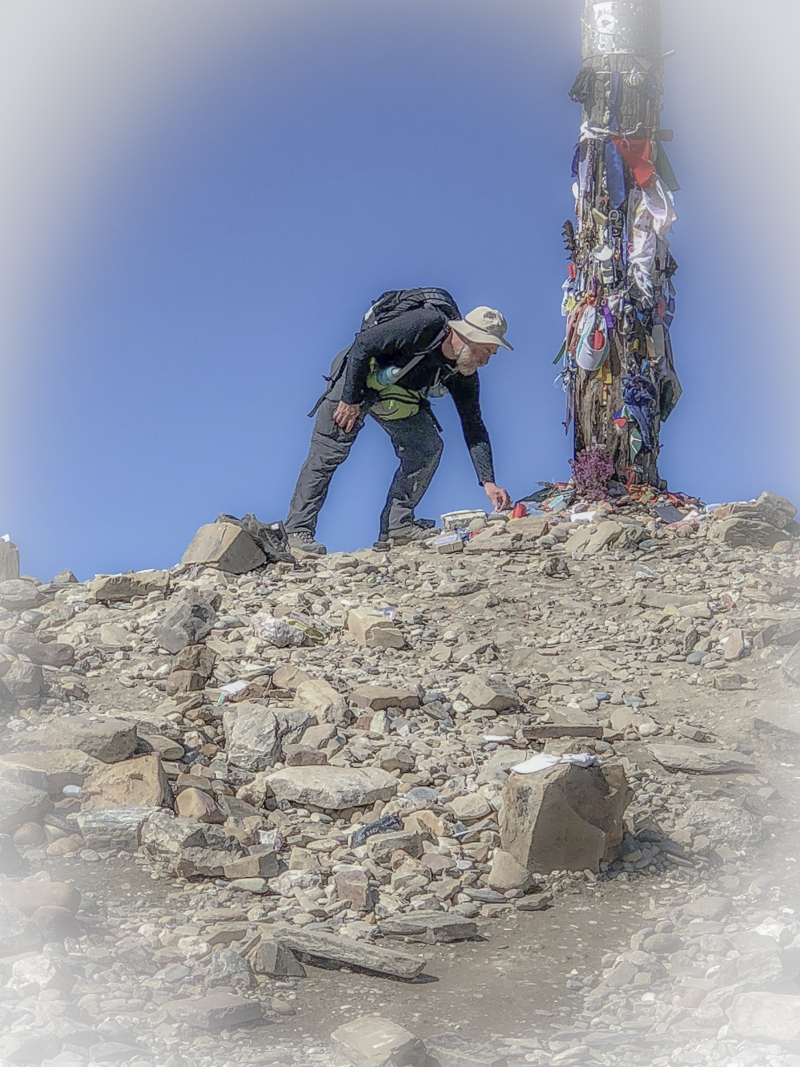
So, after many trials, Odysseus comes in sight of home. But he returns, as do we, with sharper observation and with a sense of perspective unavailable before departing, where we are immersed in our own lives. Like Odysseus, we return as a stranger, and thus better able to see issues that were previously invisible to us. So too, we return home able to see the changes we wish to make in our lives, our situation, and perhaps in our relationships. And there is a certain wariness too, as we negotiate our return.
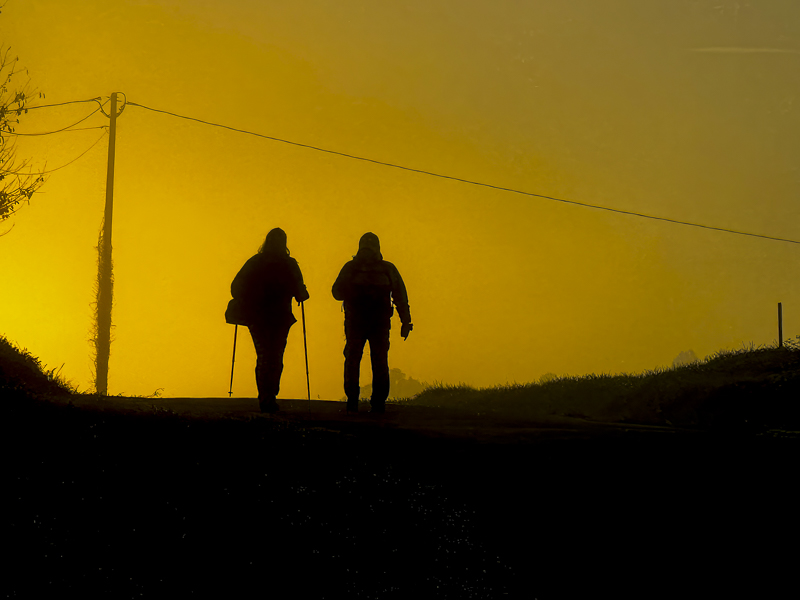
Those who didn’t come away with us on the journey assume we haven’t changed, and try to push us back into the box or identity they previously assumed was ours. Our true friends acknowledge we have changed, grown, and they accept who we are becoming. Others find friction, as the difference between the person who left and the one who arrives home can be great — as happened to Agamemnon, expecting to return to a victory celebration, but instead was killed by his wife Clytemnestra and her lover Aegisthus. Perhaps there is a decision to be made about leaving toxic relationships behind, whether at work or at home or among the friendship group — perhaps the latter based on presuming upon our resources and our time without reciprocity, not unlike the suitors to Penelope, hanging on, draining our mental resources at our expense.
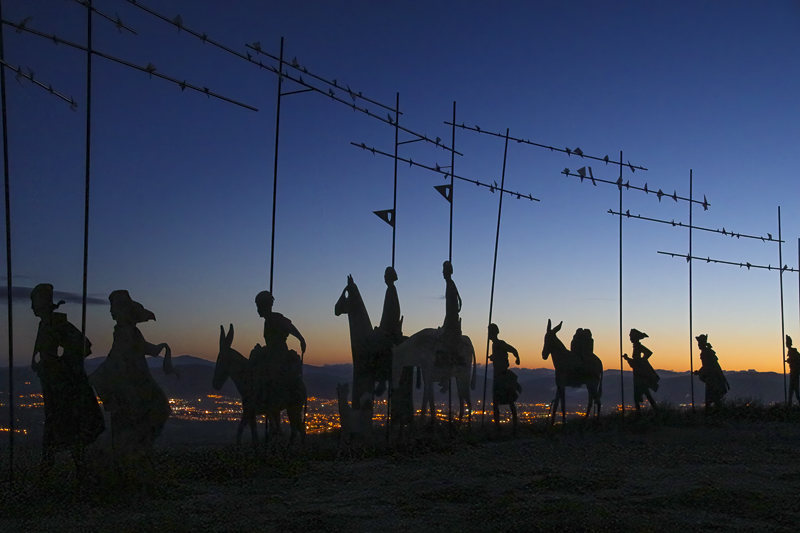
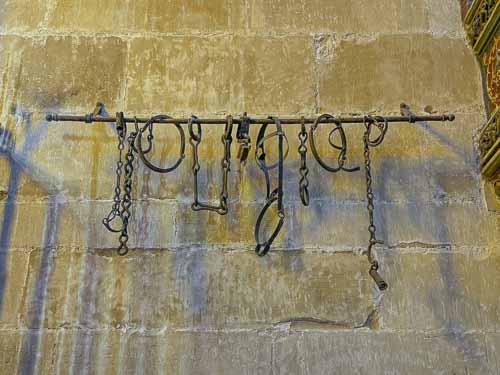
Ultimately, Odysseus asks his wife for forgiveness, but the key is that Odysseus must ultimately forgive himself, the way pilgrims found redemption on the Hill of Forgiveness, or Alto del Perdon. So it’s also a redemption story, just as we see the medieval shackles displayed in Santo Domingo de la Calzada’s Cathedral — a symbol of pilgrims who have fulfilled their sentence, their pilgrimage, and achieved forgiveness.
And the pilgrim has returned a stranger, with new vision, and new strength borne of adversity, more than others had assumed of him. Of course, we don’t engage in a literal bloodbath, as Odysseus and his son Telemachus are forced to do, but we often make new assessments about what is important in our lives, and begin declutttering our stuff, and rethinking any toxic relationships — especially at work — and use our time out on pilgrimage to clarify what is important to us and realise that the burdens we carry are only our fears and self-doubt. Buen Camino!